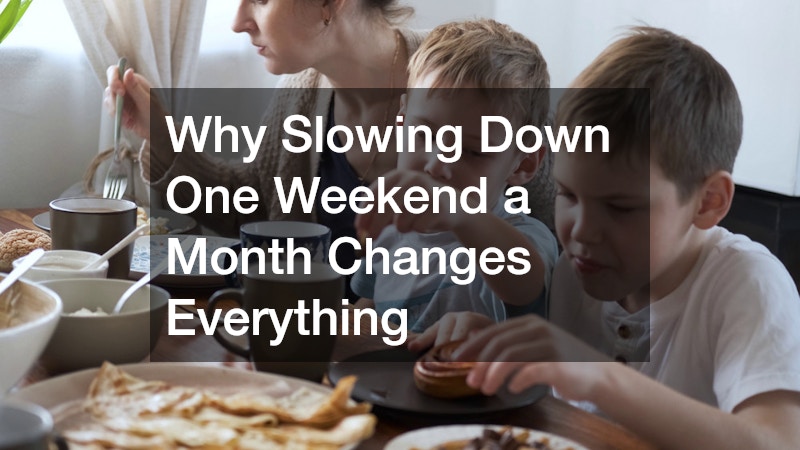
Between work deadlines, school pickups, and the endless scroll of notifications, family life can start to feel like a treadmill nobody remembers stepping onto. Many households are discovering that pressing pause for just one weekend a month, rather than waiting for a big annual vacation, resets everyone’s mood and reconnects family members in ways daily routines never allow. This kind of intentional slowdown does not require a large budget or a far away destination, just a plan to notice life again. The following ideas show how families are using slow weekends to rediscover hobbies, declutter their homes, and reinvest in their local community.
Trade Screen Time for Movement as a Family
One of the easiest ways to make a slow weekend feel different is to swap passive screen time for something physical that gets everyone moving together. Movement does not need to be a full workout regimen, it just needs to pull people out of their usual routine and into their bodies for an hour or two. Many families find that trying something new, rather than repeating the same weekend jog, makes the activity feel like an event rather than a chore.
A horseback riding class is a great example of an activity that slows the pace down naturally, since it forces riders to focus on breathing, posture, and the animal in front of them rather than a to-do list. Kids and adults alike tend to leave these sessions calmer and more present, which is really the whole point of a slow weekend.
- Look for stables offering beginner group lessons for mixed skill levels
- Book sessions in advance since weekend slots fill quickly
- Dress in layers since barns and outdoor rings can be cooler than expected
- Ask if lead-line options exist for younger children
Reconnect With Your Own Body Through Gentle Exercise

Slow weekends are not just about family bonding, they are also a chance for parents to tend to their own physical and mental wellbeing without guilt. Many parents put their own health low on the priority list during the busy week, which makes a slower Saturday morning the perfect time to reclaim it. Gentle, low impact movement tends to fit this mood far better than high intensity workouts.
Signing up for a local pilates class is one way to ease back into exercise without the pressure of a packed gym schedule or a rigid weekday routine. These classes often run shorter sessions on weekends, making it simple to fit one in before the rest of the family wakes up or right after a slow breakfast.
- Choose a studio within a short drive to avoid cutting into your relaxed morning
- Bring a mat and water bottle so you are not scrambling to get ready
- Try a drop-in class before committing to a monthly membership
- Ask about beginner-friendly sessions if it has been a while since you exercised
Nurture Creativity in Children During Downtime
A slower pace opens up space for kids to explore interests that get crowded out during the school year, particularly anything creative and hands-on. Rather than filling every hour with structured plans, parents can use a portion of the weekend to research and enroll children in activities that spark imagination over the following weeks. This is especially true when summer break is approaching and families start thinking ahead.
Art summer camps are a popular option because they give kids an outlet for painting, sculpture, or mixed media work that regular school schedules rarely allow time for. Touring a few programs during a slow weekend, rather than making a rushed decision later, helps parents find an environment that actually matches their child’s interests and energy level.
- Ask to see samples of past student projects before enrolling
- Confirm class size, since smaller groups usually mean more individual attention
- Check whether materials are included in the cost or purchased separately
- Look for programs with flexible morning or afternoon sessions
Simplify Your Closets and Free Up Living Space

A slow weekend is an ideal time to tackle the kind of home project that never seems to happen during a busy week, and closet decluttering tops that list for most families. Clearing out clothes that no longer fit or get worn creates a noticeably calmer bedroom and makes morning routines faster the following month. It also tends to reveal items that still have real value sitting untouched on a shelf.
Rather than donating everything, many families are finding that selling second hand clothes through consignment shops or online marketplaces turns unused closet space into a bit of extra spending money. This works especially well for gently worn kids clothing, since children outgrow items so quickly that many pieces barely show wear.
- Sort clothes into keep, sell, and donate piles before starting any listings
- Photograph items in natural light for better response rates online
- Research typical resale prices so you set fair, competitive listings
- Bundle similar sizes or seasons together to sell faster
Turn Old Coins and Jewelry Into Something Useful
Many homes have a drawer, box, or jar somewhere holding old coins, broken jewelry, or pieces that have not been worn in years. A slow weekend gives families the rare chance to actually sort through these forgotten items instead of shoving the drawer closed again. Taking the time to figure out what is worth keeping, repairing, or letting go of can be surprisingly satisfying.
For coins that look old or unusual, a visit to reputable coin dealers can clarify whether something is a genuine collectible or simply pocket change with sentimental value. It is worth getting a second opinion before assuming a coin has no worth, since some dealers specialize in different eras or regions and may value pieces differently.
- Bring coins in their current condition rather than cleaning them yourself
- Ask for a written appraisal if you plan to sell later
- Compare offers from more than one dealer when possible
- Keep any original packaging, cases, or documentation you find
Explore Options for Unused Valuables at Home

Beyond coins, many households also have unused electronics, tools, or jewelry that could be converted into cash or repurposed rather than sitting idle. A slow weekend is a natural time to research these options without the pressure of needing money immediately, which usually leads to better decisions. Understanding the full range of choices available makes the process far less overwhelming.
Pawn shops remain a practical option for families who want a quick, no-strings-attached estimate on an item’s value, whether or not they decide to sell it that day. Many people are surprised to learn that pawn shops also buy outright, not just offer short term loans, which can simplify the process considerably.
- Bring identification, as most shops require it for any transaction
- Ask about the difference between a loan offer and a purchase offer
- Research the going rate for your item beforehand so you know what to expect
- Get any agreement in writing before leaving items behind
Give New Life to Meaningful Jewelry Pieces
Slow weekends often bring up sentimental items that families have held onto for years, such as a grandmother’s ring or an heirloom necklace nobody currently wears. Rather than letting these pieces sit in a drawer indefinitely, some families use the extra time to explore how they might be redesigned or reset into something the next generation would actually enjoy wearing. This turns a forgotten object into a piece with new daily relevance.
Visiting a custom jewelry store allows families to talk through options like resetting stones, combining multiple pieces into one design, or simply resizing something to fit a new owner. These conversations tend to go more smoothly when there is no rush, which is exactly what a slower weekend provides.
- Bring old photos of the piece if you have sentimental design details to preserve
- Ask to see the jeweler’s past custom work for style reference
- Get a written estimate before committing to any redesign
- Discuss timeline expectations upfront, since custom work often takes weeks
Discover Character in Antique and Estate Pieces

For families who enjoy browsing rather than buying with a specific plan in mind, a slow weekend is the perfect excuse to wander through shops filled with items that carry real history. Antique markets and estate sales move at their own unhurried pace, which fits the spirit of the weekend far better than a quick errand-driven shopping trip. There is also something grounding about handling objects that have already outlived one or two previous owners.
Searching out local antique jewelry gives families a chance to find one of a kind pieces with a story behind them, often at prices lower than comparable new items from a chain retailer. Many shop owners are happy to share what they know about an era or maker, turning a simple visit into a mini history lesson for curious kids and adults alike.
- Ask shop owners about the piece’s estimated age and origin
- Check clasps and settings carefully before purchasing
- Set a browsing budget in advance to avoid impulse spending
- Visit shops in the late morning when lighting is best for examining details
Reconnect Over a Relaxed Family Meal
No slow weekend feels complete without at least one meal that everyone actually sits down for together, free from rushing off to the next activity. Food has a unique way of bringing people back into the present moment, especially when the meal itself feels a little more special than a weekday dinner. Even 45 minutes at the table, with phones left in another room, can reset the tone for the rest of the day.
Choosing where to eat can become part of the fun rather than an afterthought. Some families like to break from the usual dining room and set up a Sunday brunch on the porch, a picnic blanket in the backyard, or breakfast-for-dinner at the kitchen counter. Small changes in setting signal to everyone, especially kids, that this meal is different from the usual grab-and-go routine.
The menu doesn’t need to be elaborate to feel meaningful. A few ideas that work well: letting each family member pick one dish for a build-your-own taco or pizza night, trying one new recipe together once a month, or reviving an old family favorite that hasn’t been made in years. What matters more than the food itself is the shared effort of cooking, setting the table, and lingering afterward instead of immediately clearing plates.
Sometimes the simplest choice works best, and grabbing dinner from a local pizza place lets everyone relax without the pressure of a fancy sit-down reservation. There’s no dress code to worry about, no rush to finish before a reservation window closes, and the kids can show up in their pajamas if that’s how the evening is going. A $30 pizza order can buy just as much connection as a $150 dinner out, especially when the real goal is simply sitting together without screens or schedules pulling everyone in different directions.
Other times, families like to make a bigger deal of it and research the best restaurant in town for a slightly more memorable outing, especially if there is a birthday or small milestone to mark that month. This might mean checking reviews a week or two in advance, calling ahead for a reservation, or even letting the birthday kid pick the cuisine, whether that’s sushi, a steakhouse, or someplace new nobody in the family has tried before. The key is matching the effort to the occasion: save the elaborate outings for the moments that call for celebration, and let the low-key pizza nights handle the rest of the month’s need for connection.
- Call ahead on weekends to check wait times at popular spots, or use apps like OpenTable to reserve a table in advance
- Ask about kid-friendly menu options if dining with younger children, including smaller portions or simple substitutions
- Consider outdoor seating for a more relaxed, unhurried atmosphere, especially at spots with patios or garden views
- Pick a time between traditional rush hours, like 5:00 or 8:00, to avoid crowds and linger longer over conversation
- Leave phones on silent and tucked away to keep the focus on each other rather than notifications
- Save new restaurant discoveries for the next slow weekend to keep things exciting and give everyone something to look forward to
Slowing down one weekend a month is not about doing less, it is about doing things that actually matter to your family without the usual rush. Whether that means trying a new class, clearing out a closet, or sharing a relaxed meal together, small intentional choices add up to a noticeably calmer household. The best next step is simply picking a date on the calendar and protecting it the way you would any other important commitment.